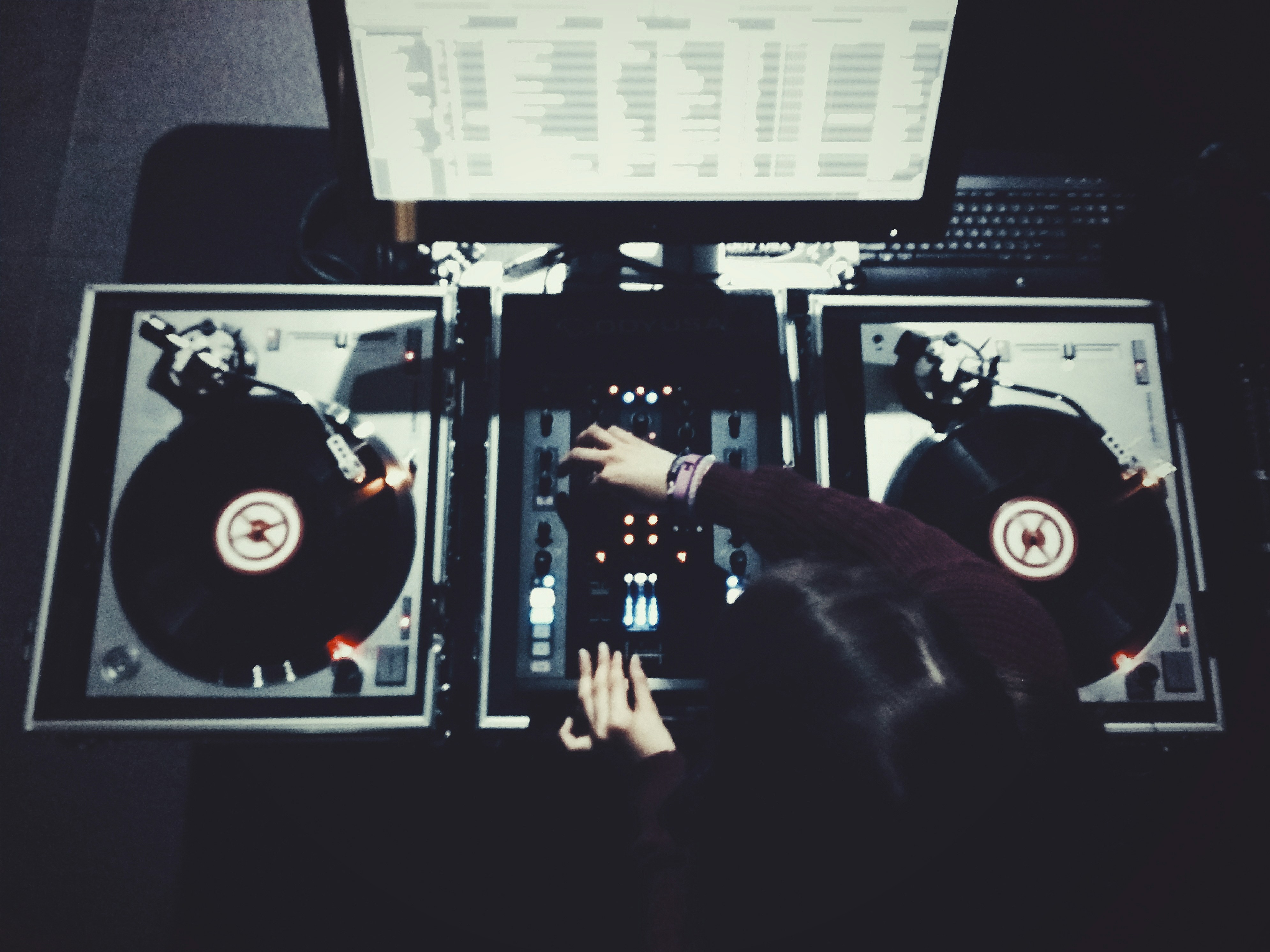
Prepare for a Faster Mix
Quick mixing at 140 or 174 BPM depends less on rushing and more on preparation. Before the set, check each track’s tempo, phrase structure, and energy. Add cues at the first usable downbeat, major breakdowns, and strong drops. Knowing where a track changes makes it easier to plan a short transition without relying on guesswork.
Organize tracks by mood and intensity as well as tempo. A well-labeled crate helps you find a compatible next tune quickly, especially when the room’s energy is shifting. If you use beat grids, verify them by ear: sync can help, but an inaccurate grid may pull two tracks out of time.
Choose a Transition That Fits
At these tempos, long blends can become crowded. For energetic tracks with busy drums or bass, try a brief phrase-matched mix. Bring in the next track at the start of an eight- or sixteen-bar phrase, then swap bass frequencies at a clean musical point. Keep the outgoing low end controlled so the kicks do not compete.
For tracks with contrasting rhythms, use a cut, echo, or short loop rather than forcing an extended blend. A breakdown can offer space for a fast handoff, while a vocal or signature sound may work as a clear transition marker. Keep effects purposeful; a small amount of echo can smooth an exit, but excessive processing can blur the impact.
Handle 140 and 174 BPM Carefully
Both tempos reward precise phrasing, but their half-time and double-time feel can make tempo readings confusing. A track labeled near 70 BPM may sit naturally alongside one near 140, and the same relationship can occur around 87 and 174 BPM. Listen to the pulse and drum pattern before adjusting the pitch fader. Match the musical feel, not just the number on the display.
Practice for Consistency
Record short practice runs and listen back for clipped phrases, overlapping bass, and sudden energy changes. Rehearse several transition options for each track, then leave room to respond in the moment. Quick mixing works best when decisions are simple, cues are reliable, and every change supports the flow of the set.